
An Evening at the Eastern Nigeria International Film Festival
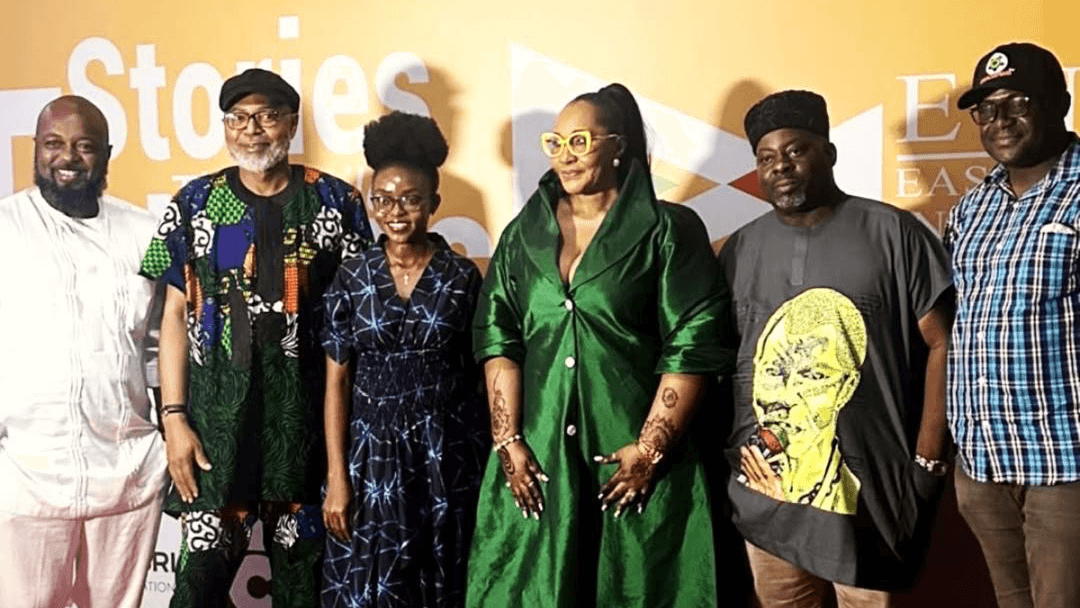
On the 18th of November, I found myself at the Eastern Nigeria International Film Festival, held at Nile Cinemas, SPAR, Enugu State. The evening began with a red carpet at 5 p.m. (African time, of course), followed by the movie screening at 6 p.m.
It was an interesting gathering, particularly because of the number of young people in attendance. I got to meet quite a number of them, alongside a few notable film directors and officials from the festival’s board. It was refreshing to see young people showing up for an event that celebrated filmmaking and the people behind the stories we consume.
The film screened that evening was Dead Tide, directed by Soji Ogunnaike. The story follows Itoro, a former militant seeking a quiet life by the beach, whose attempt at a peaceful existence is interrupted when he encounters Sade, a social media influencer who witnesses a murder involving the President’s son. What follows is an unexpected return to danger.
It was a good watch, and quite an interesting experience seeing some familiar faces return to the acting scene. The movie had its fair share of action, a few unexpected screams from the audience, and, of course, those cute moments that earned a collective “awww” from the cinema. It was one of those screenings where you could feel the audience reacting to the story rather than simply watching it unfold.
However, one of the most interesting parts of the evening happened after the screening.
We had the opportunity to interact with some of the festival’s notable figures and board members. Naturally, I had a few questions. I wanted to understand the intentions behind the festival, what it hoped to achieve, and, more importantly, how it viewed the relationship between Nollywood and the younger generation, particularly Gen Z.
I had always been curious about what I perceived as a growing reluctance among young people to engage with Nollywood productions. So, I brought up the question.
The responses I received were quite enlightening. The general sentiment was that the festival existed to celebrate the art of filmmaking, recognise and appreciate the creative minds behind the films and scenes we engage with, and create opportunities to understand, interact with and connect with young people.
Dr. Chika Nnabuife, however, had a particularly interesting response to my observation about Gen Z’s relationship with Nollywood.
She challenged the notion, pointing out that young people actually watch Nollywood films. In her words:
“Young people watch Nollywood movies. Who do you think gives all the YouTube channels their views and engagements? This notion needs to be dismissed and shut down because it’s actually pushing a wrong narrative.”
And honestly, I stand with her about 60%.
My initial assumption wasn’t entirely baseless, but it was certainly influenced by the people I had around me. I had encountered quite a number of young people who found it amusing that I could willingly sit down to watch Nigerian films on Netflix, Prime Video or YouTube, let alone pay to see one in the cinema.
Perhaps I had allowed the opinions of my immediate circle to become a general representation of an entire generation.
But Dr. Chika’s response got me thinking. Maybe the problem isn’t necessarily that young people aren’t watching Nollywood. Perhaps we need to pay closer attention to what they’re watching, where they’re watching it, and how they’re engaging with it.
It was a conversation worth having, and one I was glad to have been part of.
As the evening drew to a close, the cinema space gradually turned into a hub of conversations, photographs, introductions and networking. Young creatives interacted with one another, notable personalities connected with attendees, and new conversations began.
I left with more than just the memory of a good film. I left with new connections, interesting conversations and a slightly different perspective on an assumption I had previously held.
Sometimes, attending an event isn’t just about what happens on the stage or screen. It’s also about the conversations that happen afterwards, the people you meet and the ideas that follow you home.
And for me, that was one of the best parts of the evening.