
Sunday, November 8th 2026 · 9 min read
Anambra Web3 Conference 3.0: The Future of Money, Work and Ownership Is Changing
Maybe Web3 is not as complicated as it is often presented. Perhaps it is the professional language surrounding it that makes it seem that way.

Words like blockchain, tokenisation, stablecoins and decentralisation can sound unfamiliar to people who are hearing them for the first time. But behind these words are ideas about how people use the internet, send money, own things and do business.

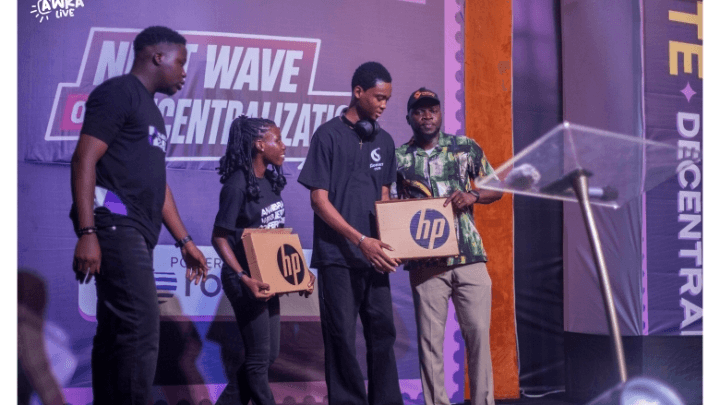
These were some of the issues discussed at the Anambra Web3 Conference 3.0, held on Saturday, November 7, 2026, at Stanel Dome, Awka. With the theme “The Next Wave of Decentralization,” the conference brought together students, including secondary school students, developers, business owners, entrepreneurs and people interested in learning more about Web3 and the opportunities it may offer.

The event also brought together companies and groups working in the space, including Roqqu,sage systems and technology,jetpad and many more. Free buses were provided to help attendees get to the venue and from the opening activities to the different discussions, the conference created room for people to learn, meet others, connect and ask questions about the future of technology.
But beyond the presentations and conversations, one question remained important; what does all this mean for the people and businesses of Anambra?
For Kenechukwu Nweke, co-founder of Anambra Techies, the growth of the community started with a simple need. There were young people interested in technology who needed a place to connect, learn and share ideas. What began as a small effort to bring these people together has continued to grow into a network across the region.
His story showed that building a community does not always begin with plenty of money or resources. Sometimes, it starts with people who share an interest and are willing to keep working towards something they believe in.

The conversation then moved to how technology is changing money and the way people access financial services.
In his keynote address, Eseoghene Onomor, CEO of Roqqu, spoke about how blockchain is changing the way people send and receive money. He compared today's digital transfers with the older process, when people often had to visit physical offices, fill out forms and use services such as Western Union or MoneyGram to send money across countries.
Today, technology has made it possible for many transfers to happen within minutes or even seconds.
“In the matter of minutes and sometimes even seconds, you can have money right then when you need it,” he said.

He also spoke about how access to financial services is changing. People no longer have to depend only on traditional financial institutions to use some global financial tools.
“Today, because of this technology, it is an open access. Anyone with a mobile phone can be able to access global financial tools that anyone everywhere also has.”

He pointed to stablecoins and tokenisation as two important changes that could shape the future of money and financial markets.
Stablecoins are digital currencies designed to maintain a steady value, often by being linked to a currency such as the US dollar. Tokenisation, on the other hand, involves creating a digital record that represents ownership of something valuable.
Kunaal Patel of Ondo Finance took the conversation further by explaining how tokenisation could change the way people own and trade assets.
An asset could be a company share, a bond, gold or even property. Through tokenisation, ownership of such assets can be represented digitally. This could make it easier for people in different parts of the world to access and trade them.
It could also allow people to own smaller parts of an asset instead of having to pay for the whole thing.
“Tokenization is going to make the world one huge gigantic financial market. People from all over the world will be able to trade in everything from all over the world,” Patel said.

However, making assets available digitally also raises questions about ownership and trust. People need to know that the asset being represented actually exists and that the person offering it has the right to sell or share ownership of it.
One of the discussions on tokenisation explained that what is recorded digitally is not necessarily the physical property itself, but proof of who owns it.
“What you're actually tokenizing is not the property. What you're tokenizing is the proof of ownership of that property so that you can now show anybody.”

This means that the actual asset and its ownership documents still matter. A trusted organisation must also be responsible for keeping those documents and confirming that the ownership is genuine. Without this level of trust, putting an asset on a blockchain does not automatically make it safe.
Another important part of the conference focused on the reason people build technology in the first place.

Prophet Emmanuel Okeke, builder of Giant Wallet, spoke about the need to create products that solve real problems. In his view, building something simply because it is new is not enough. A useful product should meet a need and be able to help more than just a small group of people.
“The most important thing is to solve a problem... If you can solve a problem that is just providing a solution for like ten persons, that's where to start from,” he said.
His point brought the discussion back to the people who are expected to use these products. Technology may be changing quickly, but the problems people face still need practical solutions.
The question of who gets to build these solutions also came up during a career discussion involving Peter Oke, Favour Nwajoko, Joy Okoye and Steph from Superteam. The session was moderated by God's Pixel, a senior designer.

The discussion looked at the different ways people can find opportunities in Web3, especially those who are just starting out. It also addressed the idea that a career in the industry must begin with coding.
While technical skills are important, the panel made it clear that Web3 needs people with other abilities too. Writers, researchers, designers, marketers and people who understand communication and community management can also contribute.

For someone who is good at writing, for example, creating useful content about a project could be a way to get involved. A designer could help a project communicate better through its visuals, while someone with research skills could help explain new ideas to others.
The important thing is to begin contributing and show what one can do.

One of the panelists explained that people who understand both technology and everyday communication are important because they help make complicated products easier for others to understand.
Another point raised was that people build trust through the work they have done and the value they have added.
“What gives you that trust actually is what you have built... the contributions you have made. So you have to aspire to start making contributions, start building something with what you are already good at. ”
The discussion offered a useful message to young people who may be interested in the industry but do not know where to begin: they do not have to wait until they know everything before taking part. They can start with the skills they already have and continue learning along the way.

This focus on talent and opportunity was also reflected in a presentation by Zikora Chukwuma, who spoke about the growth of the Anambra tech community.
He recalled seeing young people who did not have strong connections or special backgrounds become important sources of support for their families after learning a skill and becoming good at it.
“I got to see young people without connection, young people without pedigree... because they learned a skill and were good at it, became breadwinners of their family.”
He explained that a growing tech community needs three things: skilled people, technology companies or startups, and capital to support ideas and businesses.
“You cannot build an ecosystem without having technology talent,” He said.

As part of the effort to make it easier for people and companies to connect, He announced the Talent Directory. The platform is intended to help people with useful skills become visible to businesses and organisations looking to find and hire talent.
“The essence of the talent directory is to create a platform where talent can be found, identified, and hired.”
The announcement brought attention to a challenge many young professionals face. Having a skill is one thing, but being seen by the right people and getting opportunities to use that skill can be another challenge.
That challenge also came up in an interview with God's Pixel by Blacctheddi post. The conversation looked at whether Nigerian Web3 professionals are competing on equal terms with people in other parts of the world, or whether there are barriers that make it harder for them to be recognised.

God's Pixel spoke about cultural and economic barriers, as well as the way Nigerians are sometimes viewed in international spaces. He explained that Nigerian professionals can be seen mainly as users of technology rather than people who can help shape and build the industry.
He also stressed the need for Nigerian professionals to do work that makes them stand out.
“So basically like Nigerians, as Nigerian in Web3, you have to do a whole lot more... to get to be seen. And you have to be different, Because that's what makes you stand out. If you follow the crowd, you'll be lost in the crowd.”
The conversation was a reminder that learning a skill is only part of the journey. People also need to show what they can do, build useful work and find ways to make their contributions visible.
Beyond individual careers and digital finance, the conference also looked at Africa's wider economic future.

During a panel discussion, Justice Eziefule, Valentine Blaze, Barrister Mela Claude and Ehinomen Abhiele discussed the continent's resources and the reasons they have not translated into the level of economic growth many people expect.
One of the speakers pointed out the contrast between Africa's natural wealth and the economic difficulties faced by many of its people.
“Ironically, Africa is the richest continent in terms of resources.”
The discussion highlighted the need for more production, better infrastructure and access to capital. Having natural resources is not enough if a country cannot turn them into products, businesses and opportunities for its people.

One of the speakers explained that producing and making things is important for creating wealth. Technology can help by making it easier for businesses and projects to access money and use it to grow.
“You need to produce things, you need to make things to create wealth. And that is where technology's role is so critical because they help with the fast employment of capital and they also increase access to localized, low-cost capital.”

Valentine Blaze also spoke about the challenges of building technology in places where access to hardware and reliable power can be limited. He introduced DePIN, short for Decentralised Physical Infrastructure Networks, as another area worth exploring when discussing how communities can build and support physical infrastructure.
The discussion showed that Africa's technology future cannot be separated from the everyday conditions that affect people's ability to work, build businesses and access opportunities.

The conference also made room for people to show what they could create. Through the hackathon, participants presented projects they had worked on, with one drawing ideas from Igbo history and the growth of the region after the civil war.
There was also a Digital Content Creator Challenge, which gave creators an opportunity to use their skills to tell a story about their brand and the conference and among all were the winners; Chibuike who was a community builder and Onuora success

Onuora Success, a graphic designer and AI content creator, emerged as the winner. She created an animated video that introduced her brand while also connecting it to the Anambra Web3 Conference. She later received a laptop as her prize.
Her entry also showed the value of collaboration. She acknowledged the support of her friends, family and coursemates, who helped her during the process.
The different activities at the conference showed that participation in Web3 is not limited to people who write code or build digital products. There is room for people with different skills to contribute, learn and find their place.

For Anambra, the bigger question is how these conversations can lead to more opportunities beyond the conference venue. How can young people gain the skills they need? How can local businesses understand and use new technology? And how can the growing community connect its talent to companies, funding and real projects?
These questions cannot be answered by one conference alone. But events like this create room for people to meet, exchange ideas and begin working towards possible answers.
The future of technology will not be shaped by those who simply watch it evolve, but by those who dare to understand it, participate in it and build something meaningful with it.