
Monday, November 9th 2026 · 6 min read
Beyond the Runway: How GTCO Fashion Weekend Is Creating Opportunities for Young African Creatives

Fashion is often discussed through the things it produces: beautiful clothes, interesting designs, cultural expression and changing trends. But behind every garment is an industry supported by hundreds of people, businesses, skills and economic activities. From the person who makes the fabric to the designer who transforms it, the model who presents it, the photographer who documents it and the content creator who takes it to a wider audience, fashion is an ecosystem. One with the potential to create employment, develop businesses and contribute to economic growth.
It is an industry that financial institutions like Guaranty Trust Holding Company (GTCO) have increasingly recognised as an important part of Nigeria’s economic and cultural development.
Through initiatives such as GTCO Fashion Weekend, the company is creating platforms that bring together established industry figures, emerging talents, entrepreneurs and consumers, providing opportunities that extend far beyond the runway. But what does this investment mean for the people involved, and how does it contribute to the larger African creative economy?
GTCO has a history of corporate social responsibility initiatives and lifestyle events. From its annual autism conference to the Master’s Cup and GTCO Food and Drink Festival, the company has consistently explored ways to engage communities beyond conventional banking services.
GTCO Fashion Weekend is another expression of this approach, bringing fashion, entrepreneurship, education and cultural exchange into one space.
Consider the number of professions connected to a single fashion production. Textile manufacturers, designers, tailors, models, makeup artists, photographers, videographers, stylists, marketers and content creators. Each contributing a different skill to an industry that is already evolving. And when financial institutions invest in fashion, they help create conditions for talents and small businesses to become part of larger economic systems.
The investment is not just in the finished product. It is in the people, businesses and infrastructure that make the industry possible.
One of the biggest challenges facing emerging African designers is access.
Talent alone does not guarantee entry into a competitive industry. Building a fashion business requires capital, visibility, professional connections, mentorship and access to markets. These are resources many young creatives struggle to obtain independently. This is where platforms like GTCO Fashion Weekend become particularly relevant.
The event provides a free platform for designers and fashion entrepreneurs to showcase their work, interact with potential customers and connect with industry professionals. This year’s edition also featured internationally recognised designers, including LaQuan Smith, Sukeina, Kim Shui and Imane Ayissi, bringing international fashion perspectives into an environment accessible to local creatives.

For emerging designers, sharing a platform with established international names creates opportunities for exposure, learning and professional exchange. It also provides a chance to observe how different designers approach their craft, build their brands and position their businesses within the global fashion industry. Through free masterclasses, participants gain access to knowledge and practical insights from experienced professionals.
For vendors, the arrangement creates an accessible route to sales. With stall costs covered by the organisers, businesses can concentrate on presenting their products, attracting customers and generating revenue without shouldering that particular event expense. These are practical solutions that address some of the barriers that small creative businesses face.

One interesting thing about the fashion industry is how many people contribute to its success. The models on the runway may receive the most attention, but their presentation involves an entire network of professionals working behind the scenes.
Photographers, videographers, makeup artists and stylists contribute to the visual identity of each presentation. Content creators distribute these experiences to audiences beyond the physical venue. For young creatives, events of this scale can become opportunities to build professional portfolios, establish relationships and demonstrate their abilities to potential clients.
A photographer documenting a designer’s collection may attract another fashion brand. A model may connect with an agency or designer. A content creator may establish relationships that lead to future collaborations. These opportunities are not guaranteed, but the platforms create the conditions for them to happen.
The development of a creative economy depends not only on producing talented individuals but also on creating environments where their talents can be discovered, developed and commercially useful.

Perhaps one of the most remarkable aspects of GTCO Fashion Weekend is the diversity of people it brings together. Creatives travel from different parts of Nigeria and beyond its borders to participate in an event that creates a meeting point for different conversations.
For local creatives, having access to an international fashion environment without having to travel outside the country is significant. It brings the global stage closer to home and challenges the assumption that international exposure must always begin with leaving Africa.
For African fashion, global recognition should not be limited to exporting finished products. It should also involve the exchange of knowledge, professional relationships, commercial opportunities and investment.
Beyond the business and industry opportunities, the organisation of GTCO Fashion Weekend offers another perspective on what investment in the creative economy can achieve.
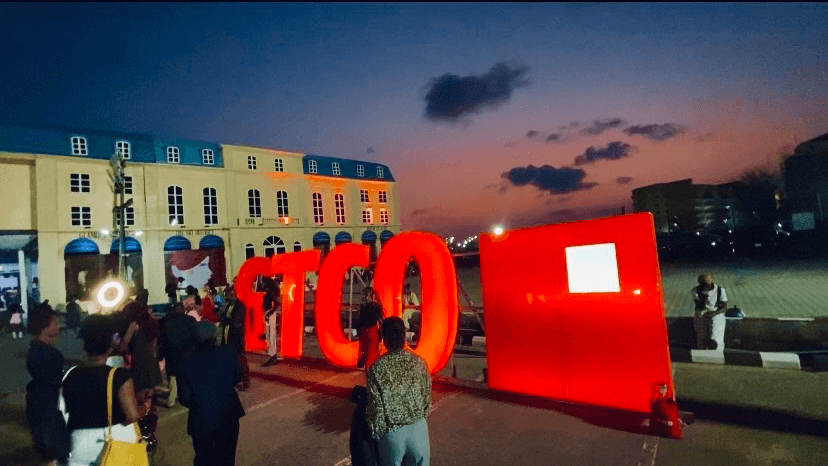
From the streets leading to the venue, directional signs made the location easy to identify. The distinction between entry and exit points, the availability of food and drinks, and the general arrangement showcased an understanding of the logistics required to accommodate a large gathering.

The decorations were carefully considered, with visually appealing spaces that encouraged visitors to photograph, document and share their experiences. Everything contributed to an environment that was not only functional but also visually consistent with the event’s identity.
And then there was the fact that admission was free.
For an event operating at such a scale, removing the financial barrier to entry makes the experience accessible to a wider audience, allowing people who might not ordinarily have access to such spaces to participate and connect. The venue became a meeting point for people who might otherwise never have crossed paths.
Photographers and videographers found opportunities to create together, while other creatives discovered people whose interests and ambitions aligned with theirs. There was a visible sense of excitement around the venue. People were happy to be there, to express themselves and to experience an environment where creativity was not treated as an unusual pursuit.
For young Nigerians from environments where creative careers are not always understood or considered financially viable, this kind of exposure carries a huge significance. It provides a glimpse into an industry where people are building businesses, earning from their skills and developing professional careers through art and creativity. Because sometimes, seeing what is possible is an important part of understanding what can be achieved.
The larger question is what happens after the event.
A fashion weekend can create visibility, provide people with new markets and opportunities for networking. But the long-term development of the industry requires more than a few days of activity.
This is where initiatives such as the GTCO Fashion Collective become particularly important. They point towards the possibility of extending opportunities beyond a single event and creating sustained connections between emerging businesses and the wider fashion market.
For Nigeria and Africa, the potential is significant.
A stronger fashion industry can support local manufacturing, encourage entrepreneurship, create employment and contribute to the export of African products and cultural identity. It can also strengthen the continent’s soft power by giving African designers and creative professionals more opportunities to influence global conversations about fashion, aesthetics and culture, by telling Africa’s story through design, style and art.

GTCO Fashion Weekend offers an interesting example of what happens when corporate investment meets creative culture. It demonstrates that investing in culture and creativity also means investing in people, businesses and economic development. Africa has no shortage of creative talent. What is important is building the structures that allow that talent to thrive.
The next African fashion success story may begin with a young designer discovering a market for their work, a model meeting the right professional contact, a photographer building a portfolio or an entrepreneur finding a customer who believes in their product. These individual opportunities may appear small, but collectively, they contribute to something much bigger.
The future of African fashion will not be determined by the beauty of what the continent creates alone, but also by the opportunities, industries and economic systems built around those creations.
That is the bigger story beyond the runway.