
Wednesday, November 11th 2026 · 6 min read
Go Further: The RUTH8 Journey So Far
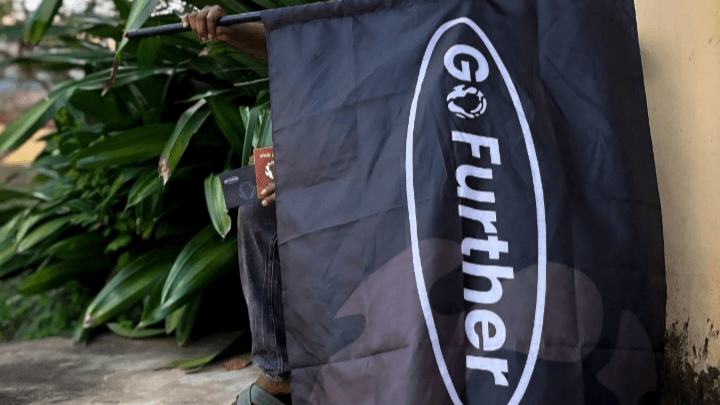
Sometimes, a movement begins with a simple question, but the answers it discovers lead to bigger questions, new conversations and a much wider purpose.

For MadeInBlacc, the journey has been one of rediscovery, expression and participation. What began as an effort to reconnect young people with their heritage has gradually opened up conversations about cultural identity, storytelling, creative expression and the place of young people in shaping the future of their communities.

At the centre of this journey is RUTH8, an acronym for Returning Unity Through Heritage. Built around the belief that understanding where we come from can help us understand who we are and where we are going, RUTH8 set out to create experiences that would bring people closer to the history, traditions and knowledge that shape their identity.

The journey began with a physical trip from Awka to Enugu on August 28 and 29, 2026. Beyond the experience of travelling together, the visit created an opportunity for participants to encounter parts of Nigerian and Igbo history, some of which they had not fully understood before. It was an introduction to the depth of what had been inherited and the importance of knowing more about it.
But discovering history also brought another issue into focus: the way stories are told and who gets to tell them.
If our stories are worth preserving, who gets to tell them? How do we ensure that our experiences, histories and perspectives are properly represented rather than being told through someone else's interpretation?

These questions became part of the conversations around storytelling, particularly during the RUTH8 Workshop Dinner held on September 12, 2026, under the theme Who Gets to Tell Our Story?
One of the important contributions to that conversation came from Dr Chika Nnabuife, who challenged creatives to take ownership of their narratives. Her message pointed to the need for stories that reflect the realities, experiences and identities of the people telling them. It was not enough to simply tell stories about Africa. There was a need to tell specific stories about our communities and the people who live in them.

The conversation also brought attention to the importance of documenting the present. While previous generations left behind records of their experiences, there is a responsibility to keep an account of the lives people are living today. The next generation should not have to depend only on what others preserved for them. They should also have access to records of their own time, the things people experienced, the challenges they faced and the changes they tried to make.

This is one of the ideas that made the conversations around RUTH8 extend beyond historical discovery. Preserving heritage is not only about looking back at what has been passed down. It also involves paying attention to what is happening around us and making sure those experiences are not lost.
Another part of the journey has been exploring how culture can remain relevant through practice and creative expression. Knowing about a tradition does not necessarily mean it will survive. People have to engage with it, understand its value and find ways to keep it meaningful in their everyday lives.

This became an important part of the thinking behind Table 3, IMPRINT: Eat, Paint and Watch at the Godwin Art Gallery. Through its focus on cultural expression, the conversation explored how people can connect with traditions in ways that are engaging and relevant to their lives today.

It also brought attention to the different parts of cultural identity that are sometimes overlooked. Language, traditional dressing, marriage practices and social networks all contribute to how people understand and express who they are. These aspects of culture deserve more attention, particularly as some have gradually become less visible in everyday life.
Francis, one of the crew members, believes that the conversation should go beyond simply knowing about culture. He emphasised the need to develop and promote what has been inherited, rather than allowing important aspects of cultural identity to be neglected. For him, the goal should not be to preserve everything exactly as it was, but to understand what we have and find ways to evolve it.

This brings another dimension to what RUTH8 has been exploring. Heritage is not something that should remain distant or disconnected from the lives of young people. It should be understood, practised, questioned and developed in ways that allow it to remain relevant.
The conversations around identity, storytelling and participation have also helped shape the direction of the upcoming fourth Table, Office of Tomorrow. Proposed by MadeInBlacc Factory as the Office of the Tomorrow's People, the initiative introduces a conversation about young people's representation and involvement in decisions that affect their communities.

It recognises that young people should not only be encouraged to understand their society and its history. They should also have opportunities to contribute their ideas, take responsibility and participate in the spaces where decisions about their lives and communities are made.
In this sense, the proposed Office of Tomorrow extends the conversations RUTH8 has been building. It moves the focus beyond understanding identity and expressing culture to considering how young people can take an active role in shaping the communities they belong to.
Looking back at the three Tables, members of the crew have different experiences that stood out to them most.

For Zee, the first Table was particularly significant because of what he learnt about Nigerian and Igbo history. He explained that he had always known the story of Biafra, Nigeria and the government was complicated, but he “didn't know just how much.”
The experience gave him a deeper understanding of the events that shaped the country and the Igbo people.
“Table 1 was a deep dive into our heritage and history as a nation first..then as igbo people.”
He also highlighted the opportunity to connect with other young people who share an interest in making a difference.

Francis also identified the first Table as the experience he connected with most. He felt that the museum visit opened their eyes to the amount of historical knowledge available and wished more publicity had been given to what the museum contained. He believes that making more people aware of this knowledge and encouraging them to develop their understanding of it could contribute to what RUTH8 is trying to achieve.

For Dii Dii, however, the second Table stood out because of the conversations around legacy, culture and preservation. One question that stayed with her was who was keeping an account of the present time. She felt that just as previous generations had preserved what they knew, the present generation also needed to document its own experiences so that those coming after them could understand what life was like and the efforts being made to create a better society.

Her reflections also reveal how her understanding of RUTH8 has changed. She initially thought it would mainly involve conversations and explanations about KARTHLOG, helping people understand the app and its purpose. But her involvement has shown her that the initiative is much broader than that.

She sees value in bringing together people from different backgrounds and perspectives, creating room for them to examine important questions and discover the ideas they have in common. She also believes RUTH8 is encouraging people to become more curious about their culture and the way they live, rather than simply accepting what they have been told.
More importantly, Dii Dii sees a connection between the first three Tables and believes that the conversations and ideas developed through them are extending into the fourth. Although she acknowledges that the previous Tables have not been perfect, she recognises the effort to link their conversations and build on the ideas raised along the way.

That connection is important to the story of RUTH8. Each experience has opened up a different area of discussion, but the conversations have continued to inform one another. The discovery of heritage has encouraged questions about storytelling. Those questions have brought attention to documentation and preservation, while the conversations around culture have created room to consider how young people can participate more actively in their communities.

As RUTH8 approaches its fourth Table, there is still much to explore. The experiences so far have shown that reconnecting with heritage can lead to conversations that go beyond history and tradition. They can also raise questions about identity, responsibility, representation and the kind of society people want to contribute to.
The journey so far has been about creating room for these conversations and bringing people together around them. What the next Tables will add to this growing movement is something worth looking forward to.