
Thursday, November 5th 2026 · 3 min read
Who Shapes Youth Culture When Young People Are Not in the Room?
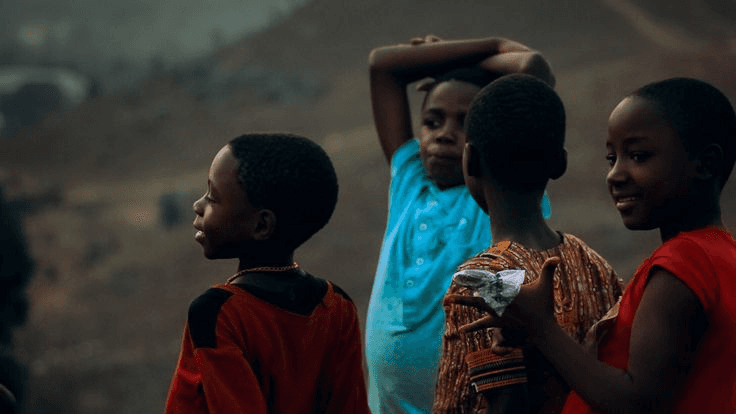
One of the strangest things about growing older is discovering that people who have never lived your life can become experts on it.
They can explain your choices. They can interpret your values.
They can describe your generation with confidence, sometimes without ever having asked you why you see the world the way you do.
It is a pattern that happens almost everywhere.
A parent tries to understand a child.
A society tries to understand a generation.
An institution tries to understand the people it hopes to serve.
And somewhere between observation and understanding, something important can be lost.
Because watching a life from the outside is not the same as experiencing it from within.
The Stories We Tell About Young People
Every generation eventually becomes a subject of conversation.
People study this generation’s habits. They analyse its preferences. They discuss its relationship with work, technology, relationships, culture and ambition.
Some of these conversations are necessary, because every society needs to understand the people who will carry it forward.
But there is a difference between trying to understand a generation and simply creating explanations for it.
The first one begins with curiosity while the second one begins with assumption. And assumptions have a way of becoming stories.
Sometimes, the problem is not that people are unwilling to see young people.
The problem is that they are seeing them through a lens that was created before they were truly heard.
Culture Is More Than What Can Be Observed
Culture is easily noticed from the outside in most cases.
It appears in music. It appears in fashion. It appears in language, entertainment and the things people create.
But culture is not only what a generation produces. It is also the meaning behind what it produces.
A song is not just a song. Sometimes it carries memories, frustrations, hopes and questions that a generation is trying to express.
A creative movement is not just a trend. Sometimes it is a response to a world changing faster than previous systems can understand.
A new way of gathering is not simply a different habit. Sometimes it reflects a deeper search for belonging.
This is why culture cannot be fully understood by observation alone.
It must be understood through conversation with the people creating it.
When People Are Missing From Their Own Story
Representation is often discussed as being given a place in a room.
But perhaps representation begins before that.
Perhaps it begins with something more fundamental:
Who gets to explain a people's reality?
Who gets to interpret their experiences?
Who gets to decide what their culture means?
A generation can be highly visible and still be misunderstood.
Its images can be everywhere.
Its creativity can be consumed by millions.
Its ideas can influence society.
And yet, the people creating those things can still be absent from the conversations that define what those things represent.
There is a difference between being featured and being involved.
There is a difference between being observed and being understood.
Creating Space for the People Creating Tomorrow
The challenge, then, is not simply creating more spaces where young people can speak. It is creating spaces where their experiences can become part of a larger conversation about culture, identity and the future.
This is why we are proposing the Office of the Tomorrow’s People.
Not as a replacement for the voices, communities and creative movements that already exist, but as a structure that helps connect them with the wider conversations that shape society.
An office cannot create the identity of a generation. A generation creates its own identity.
But meaningful structures can help ensure that those stories are heard accurately, documented thoughtfully and connected to the wider society around them.
A culture that is constantly interpreted from the outside risks losing the voices that give it meaning.
The Generation That Must Be Allowed to Speak
Every generation eventually becomes part of history.
People will look back and try to understand what mattered to them, what they created and what they believed.
The question is:
Will they encounter the voices of that generation itself?
Or only the interpretations that others created about it?
Maybe the responsibility of every society is not only to observe its young people, but to remain curious about them.
The people creating the future should not become strangers in the story of their own becoming.
They should be among its authors.