
Monday, October 19th 2026
Artifact: Telegraph - The Invention That Shrank Distance
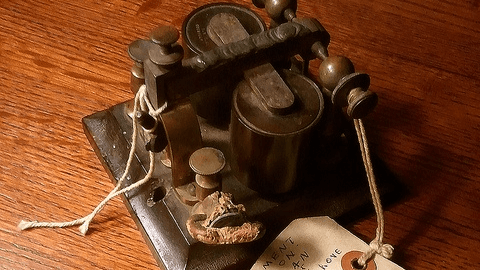
Long time ago, humans lived in an era where messages had no choice but to travel the same way humans did.
If someone wanted to send news across a country, the message needed a messenger. If a merchant needed information from a distant market, they had to wait for a ship or a traveller to return. Distance was measured not only in miles, but in time.
Then, in the nineteenth century, the telegraph changed one of humanity's oldest limitations.
Using electrical signals sent through wires, the telegraph allowed messages to travel across extraordinary distances in minutes rather than days or weeks. Samuel Morse's development of Morse code gave those signals a language, turning pulses of electricity into words that could cross countries and continents with astonishing speed.
With a simple network of wires and electrical signals, the telegraph allowed words to travel without a person carrying them. A message could leave one location and arrive somewhere far away within minutes. For the first time, humanity separated information from movement.
The telegraph did not just improve communication. It changed how people made decisions. Businesses could respond faster to opportunities. Newspapers could report events beyond their immediate surroundings. Governments could coordinate across territories with a speed that was previously impossible.
The world was still the same size, but it suddenly began to feel smaller.
In Africa, the arrival and expansion of telegraph systems became part of a larger transformation in communication. Lines connected important centres and created new pathways for information exchange, laying foundations that would eventually contribute to modern telecommunications across the continent.
The telegraph may look simple compared to today's smartphones and satellites. Back then, there were no screens, no applications, and no instant images. Yet hidden inside its wires was a revolutionary idea: Information did not have to wait for movement.
This idea has become the foundation for everything that followed, like the telephone, radio, the internet, and the digital networks that now connect billions of people.
The telegraph was not the fastest invention of its time.
It was the first invention that made speed itself part of communication.
And once humanity discovered that messages could outrun movement, the world entered a new age.