
Tuesday, October 6th 2026
Awka- Enugu: We Left Home To Understand Home
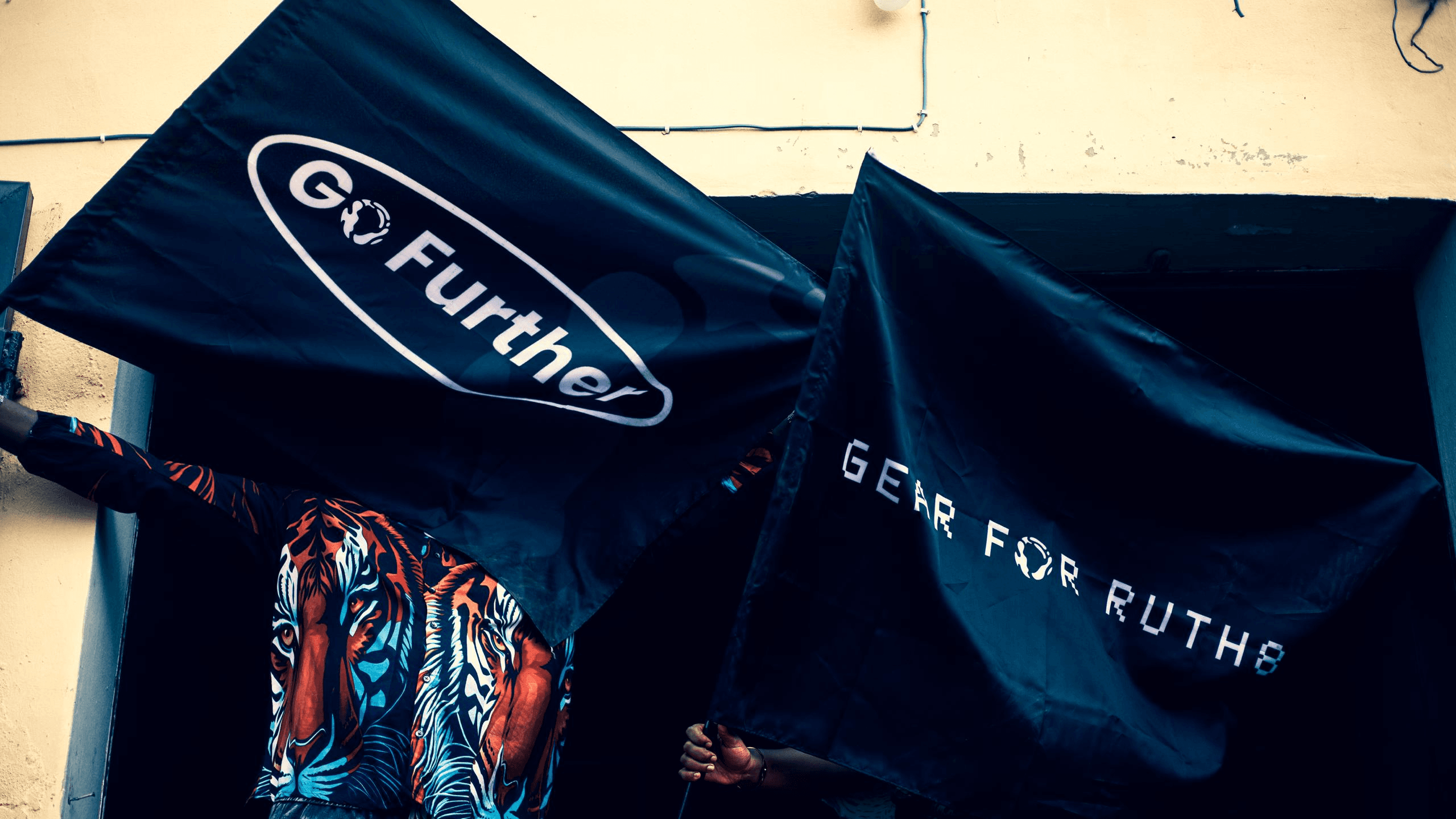
RUTH8: A Journey Back to What We Almost Forgot
A journey does not always begin with a vehicle moving, sometimes it begins with a question
What survives? What do we remember? Who tells our story? What will we preserve?
These were the questions behind RUTH8’s first journey on August 28–29, 2026, a journey that took a group of young people from Awka to Enugu in search of something deeper than a change of location and that's a connection with heritage, history and identity.

RUTH8, an acronym for Returning Unity Through Heritage, is built around the idea that understanding where we come from, can help us understand who we are and where we are going. The number ‘eight’ ,according to the initiative’s leader, Derrick Osoko, represents infinity a continuous link and an idea of growth.
The first journey was therefore not simply a trip to see places. It was an invitation to look again at stories, objects, traditions and memories that can easily become distant when they are no longer actively preserved.
Leaving Home to Discover Home
The journey began at Film Village in Awka, where the crew gathered before setting out for Enugu.
Even before departure, the environment offered an unexpected introduction to one of RUTH8’s central concerns: what happens when we stop caring for the things we have?

The cultural setting, once designed with recreational and creative potential, appeared neglected, with old huts, a dried-up swimming pool and other signs of abandonment.
But the location also housed a children’s skill hub where young people could learn ICT and digital skills, music, arts and crafts, hairdressing, drama and dance, and fashion designing.
This was difficult to ignore;a place with the potential to nurture creativity and preserve culture was itself showing signs of being forgotten.
For Starling, one of the crew members, the site still held potential.
“For now, I'm not seeing it like it's functional... I'm just seeing like an abandoned place... But if it's renovated, I feel it will do better as a recreational site.”
Enugu, Derrick explained, was not chosen by accident.
“Enugu is closer, and Enugu contains more of the things that this collection has for us, the home, the shelter, and the engine”
But underneath the logistics was a sharper point, one about what Nigeria is actually losing:
"We're losing our identity, our self. Most of us, we don't even know who we are “

Derrick traced that loss through three forces, slavery, which broke the chain of cultural transmission by selling away the elder meant to teach the culture.
Colonialism, which came after and sold off what remained "as art"; and the Nigeria–Biafra war, which destroyed few heritage and institutions left.
For him, the way back begins with understanding where our forefathers were heading before those disruptions
Before departure, members of the crew shared what they hoped to find on the journey.
For Nene, the objective was simple: “To go to the root.”
She was visiting Enugu for the first time and hoped to encounter its history, culture and the unexpected experiences that would come with the journey.
Her understanding of travelling beyond home captured one of the ideas at the heart of RUTH8:
“You might not know everything in your house, but when you step out, you'll know more about home.”

For others, the journey was an opportunity to examine the parts of culture they believed were gradually disappearing from traditional foods and ingredients to classic Igbo music and indigenous knowledge.
Architect Onyenze Ezechekwube David offered one of the sharpest reflections on the loss of historical knowledge,
“A lot of persons don't even know it exists.” he said
From Nsibidi to the stories of Mungo Park “discovering” the River Niger and Mary Slessor being credited with ending twin-killing, he questioned how African history has been remembered and retold.
His point was simple
“Without our history telling us these things, we don't know how great we were. That's why we're always feeling inferior.”
The journey had not even properly begun, yet the central theme was already becoming visible; there is a difference between having a heritage and actively knowing it.
Enugu: Where History Became Tangible

At the Centre of Memories, the crew encountered exhibitions and stories created around the preservation of Igbo culture and history. Its guiding motto, “Maka unyaa, taa na echi” for yesterday, today and tomorrow captured the philosophy behind the visit,connecting the past not just to remembrance, but to the future.

Being led by the tour guide,Ifeoma Nnamani the crew encountered Igbo cosmology, traditional beliefs, deities, masquerades, musical instruments, scarification, titles, Ikenga and indigenous systems of knowledge.
For some, familiar words suddenly carried different meanings. For others, things they had previously heard about became physical.
The visit also challenged some of the assumptions and representations surrounding Igbo culture.
She corrected a common misreading of Igbo spirituality along the way
"Igbo people don't have the concept of devil... we don't have that powerful being that is believed to be opposing Chukwu”
Even Ekwensu, often mistranslated as “the devil,” was a god of war and mischief, ruthless and unpredictable but not evil, as colonial framing suggested.

Ifeoma took through Igbo masquerade traditions, from Adamma and Ogwurugwu,Omaba,Izaga,Onye kulu,Ogaranya leading up to ijele,widely recognised as one of the most significant Igbo masquerades and the Igbo cultural element inscribed on UNESCO’s Representative List of the Intangible Cultural Heritage of Humanity.

She also explained igbu ichi, the scarification ritual marking initiation into Nze na Ozo, noting that those who bore the marks were reportedly rejected during slavery as they were too strong-willed to enslave.
“How do you enslave a royalty?” she asked. “How do you enslave someone who has already learned to endure pain for who they are?”
She described the Ikenga as a symbol of personal strength and achievement, made to reflect its owner identity or essence As she put it,
“There’s an interesting relationship Igbos had with their Ikenga” it was one built on reciprocity, not fear.

The guide discussed the role of masquerades beyond entertainment, traditional systems of justice and social order, the work of Dibias, and the different cultural practices that existed across Igbo communities.
One important point was the Igbo culture has never been a single uniform system. Different communities had practices peculiar to them, even where similarities existed.
Remembering the War
The journey then moved from cultural identity into one of the most painful chapters of the region’s history: the Nigerian-Biafran War.
Through photographs, newspapers, documentaries and archival materials, the crew encountered the political circumstances surrounding the war, the coups of 1966, the creation of new states, the declaration of Biafra, the humanitarian crisis and the eventual end of the conflict.

The stories were no longer simply names and dates,they became stories of people.
How the war was fought,children assisted in ways they could. Families were displaced and food became scarce. Communities experienced death without always having the opportunity to properly mourn their loved ones.
The exhibition showed more than stories told in textbooks
For the crew, seeing the photographs and archival materials offered a different way of encountering the past.
Seeing Who We Were
The following day, the crew visited the National Museum of Unity in Enugu, where another dimension of the journey unfolded.
The museum presented archaeological and ethnographic materials, traditional architecture, tools, weapons, cultural objects and the history of Enugu as the Coal City.

Among the exhibits were Igbo-Ukwu bronzes, traditional household structures, Igbo iconic hut that were warm during cold weathers and cold during hot weathers,Nsibidi symbols and representations of Igbo worldview and social life.

Two reflections stood out afterward, Francis, was amazed by how much the exhibits corrected; that the leopard is the true Igbo symbol of “Isi Agu” not the lion,that women historically held titles and power, undercutting assumptions of strict patriarchy; and that in traditional practice, a man didn't only beg his “chi”
“ he gives instructions.That's power.”
For Sire X,one of the crew member, the difference between reading history and physically encountering it was a whole lot
History becomes more real when the objects described in books are standing in front of you.
In his words;
“When you read, it's knowledge. But when you see these artifacts for real, it becomes a reality”
That may have been one of the clearest outcomes of the RUTH8 journey.
Heritage becomes easier to value when it becomes visible.
A Place to Rest
After arriving in Enugu, the crew settled into their accommodation at Enugu Airbnb, one of the partners that supported the RUTH8 first journey.
Located at 36 St Mary Emmanuel Street, Trans-Ekulu, the property provided the crew with a comfortable and private space to rest between activities.

During the stay, the crew was introduced to the property by its Business Development Manager, Mr. Ikechukwu Ndukwu, and experienced the home-away-from-home setup that defines Enugu Airbnb.
The properties feature fully furnished kitchens and high-capacity refrigerators, giving guests the flexibility to prepare their own meals. Security is also a major feature, with 24/7 CCTV surveillance and security personnel. An in-house fleet of chauffeured vehicles, including Hilux SUVs and Siennas, is also available for city movements and longer regional trips.
For the RUTH8 crew, however, the accommodation became more than a place to spend the night. It was a space to rest, reconnect and prepare for the experiences ahead.
The Journey Was Also About the People
RUTH8 was not only museums, exhibitions and historical conversations.
There were meals, jokes, games, long conversations and moments of exhaustion.
During dinner, the crew learned more about the RUTH8 ecosystem and its Engine, Shelter and Pathfinder concepts. There were collectible cards, digital assets, games of Concentration and Gwam Gwam Gwam, and a moment where everyone shared photographs from the journey and explained what those images meant to them.
These moments mattered because they turned the journey from a guided tour into a shared experience.
People were not only being told what heritage meant.They were forming their own memories around it.
From History to Adventure
The final stretch of the journey took the crew to the Ngwo Pine Forest and waterfall.
After spending hours surrounded by museums, historical objects and conversations about identity, the forest offered something different: movement, nature and adventure.

The crew walked through the pine forest, descended numerous stairs towards the waterfall and eventually had to make the exhausting climb back up.There were jokes, pictures, excitement and even an unexpected waterfall bath.
By the time the group returned to Awka, tired faces had replaced the excitement of the morning.
But they were returning with more than photographs.
They were returning with a deeper awareness of what they had seen and with something even more important: questions about what happens to these stories, places and traditions after the journey ends.
What Do We Preserve?
Perhaps the most important part of the RUTH8 journey was not a single place visited.
It was the realization that heritage does not preserve itself.

A language can disappear when people stop learning it.
A tradition can disappear when younger generations stop asking questions.
A historical site can deteriorate when it is abandoned.
A story can be distorted when the people who carry it are no longer around to tell it.
And an identity can become difficult to recognize when the connection between generations is broken.

That is why RUTH8 describes its mission as Returning Unity Through Heritage.
The journey begins with returning to the stories, places, knowledge and memories that shaped us.
But returning is only the beginning,the hardest part is deciding what to do with what we find and perhaps that is where the real journey begins