
Monday, September 7th 2026
Builders of Tomorrow
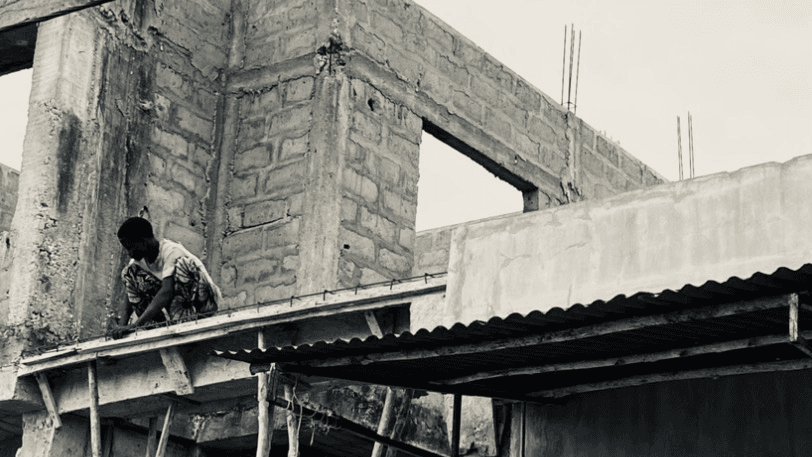
Every era is built before it is named. Long before a new way of living becomes normal, someone has already predicted it.
A new technology is tested, a new policy is proposed, another community is formed, an innovative business is started, a creator uses their voice to question something that has always been accepted. Eventually, what once seemed unfamiliar becomes ordinary. The people responsible for that transition are often called innovators.
In this article, let’s refer to them as builders.
A builder does not always hold a hammer, or have engineering skills. Some write policies, develop technology, and create businesses. Some build communities and advocate for change. Others fund it, communicate it, enforce it, or create the culture that allows it to survive. Like every building, the next era will require different hands. And Africa’s next chapter will be built in much the same way by young people who are increasingly unwilling to inherit old problems without questioning them.
Across the continent, a new generation is entering an economy shaped by technology, entrepreneurship, creativity, and increasingly, artificial intelligence. The relationship between humans and machines is still being negotiated. Whether it becomes a synchronized choreography or a dance battle remains uncertain.
What is certain is that the transition has already begun.
The question is whether Africa will simply adapt to the systems being created elsewhere or participate in designing the ones that will shape her own future.
This is where builders matter.
Africa does not lack talent, neither does she lack ideas. Information has never been more accessible, so that’s not an excuse. What remains difficult are the systems that allow those ideas to become sustainable realities. This is why the next era will require more than innovators. It will require innovative policymakers, entrepreneurs, creators, technologists, researchers, community builders, and institutions willing to support change.
The builder usually begins with a moment of realization. A moment when something familiar suddenly looks different. Whether it’s a problem experienced personally, or a question that refuses to disappear. It begins with an awareness that something could work better. And from that moment, a vision begins, and vision eventually requires persistence.
However, most people will not understand what is being built while it is still taking shape. The value of a new system is often difficult to see before it changes something tangible. History is filled with ideas that were questioned before they were accepted. Builders continue anyway. Not because they are certain of the outcome, rather they have seen a possibility that others have not yet seen.
Some are already building.
Startups are creating new economies. Communities are connecting people around shared knowledge. Creators are finding new ways to participate in commerce. Young Africans are using technology not only to consume the future, but to design their place within it. The work is still unfinished. Perhaps it will always be. The future is not something to fantasize about from a distance. It is something assembled through thousands of decisions made in the present.
Tomorrow belongs to the young, but not simply because they are young. It belongs to those willing to care about what comes after them. Those willing to question, imagine, persist and build.
Together.
Because every era eventually becomes someone’s inheritance. The question is what we choose to leave behind.