
Tuesday, October 27th 2026 · 2 min read
Great Zimbabwe: The City That Built Its Own World Behind Great Walls
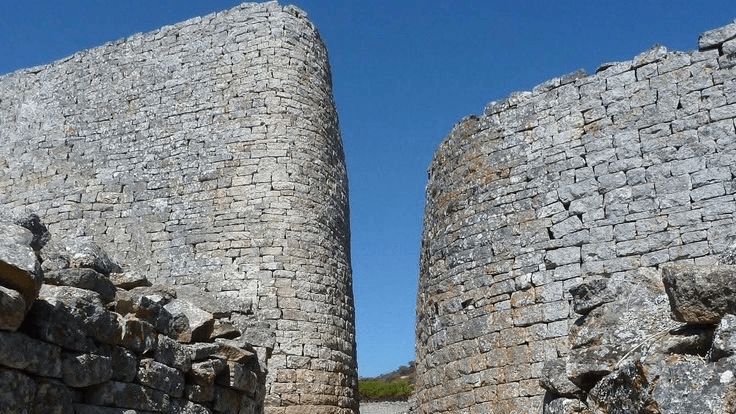

Picture a city where stone walls rise from the landscape, curving around courtyards and passageways without a single drop of mortar holding them together. The work of African hands, shaped by generations of skill, knowledge and ambition.
This was Great Zimbabwe.
Between the 11th and 15th centuries, in what is now southeastern Zimbabwe, the Shona people built one of Africa’s most remarkable precolonial cities. At its height, Great Zimbabwe was a centre of political power, craftsmanship and trade, with a population of tens of thousands.
The great walls of Zimbabwe is recorded to have been the largest pre-modern structure south of the Sahara, eleven metres tall and six metres thick. Imagine a wall as tall as a three-storey building and thick enough for four adults to lie down head-to-toe across it.

Its architecture tells a story of craftsmanship.
Builders fitted granite stones together without mortar, creating enormous walls that still stand centuries later. The Great Enclosure remains one of the most impressive examples of ancient African stone construction. Yet these walls were not necessarily built for defense, they may also have marked social boundaries and expressed the authority of the rulers. Portuguese sailors who had come upon this land more than three centuries described that it must have been built by the devil himself.
Beyond its walls, Great Zimbabwe was connected to a world far larger than its immediate surroundings. Archaeologists uncovered Chinese porcelain, Persian glass beads and other imported goods, evidence of long-distance trading networks that linked the city to the Indian Ocean. Gold, cattle, agriculture and local crafts helped sustain its economy. This was a city participating in a much wider commercial world.
Yet when European colonisers encountered its ruins, some refused to accept that Africans had built them. They attributed the city’s origins to distant civilisations. Including the Phoenicians and the biblical Queen of Sheba. These theories reflected colonial prejudices rather than the archaeological evidence, which established the site’s African origins and its connection to Shona civilization.
By the 15th century, Great Zimbabwe’s influence had begun to decline with environmental pressure, changing political circumstances and economic shifts among the possibilities scholars have explored. But the city’s decline did not erase its achievements.

Today, its ruins still remain a powerful reminder of a history that existed long before colonial accounts attempted to explain it away. Great Zimbabwe did not need to borrow its greatness from another civilization. Its stones tell a story of African ingenuity, ambition and connection to the wider world.