
Tuesday, October 20th 2026
History Of Roads
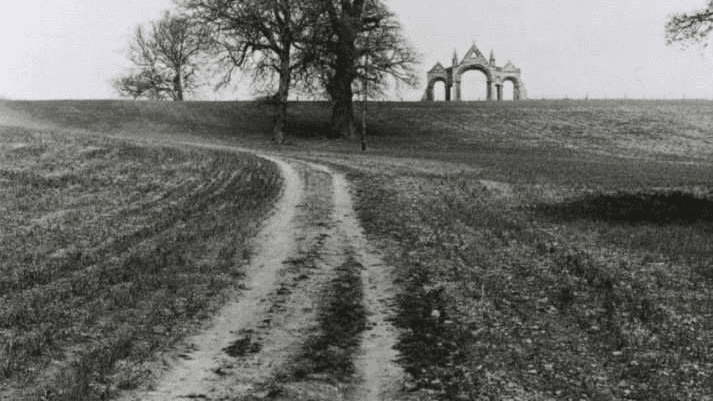
The first road was never built.
It was remembered.
Think about it.
No government announced it. No engineer designed it. No machine paved it. Someone simply walked from one place to another. Then someone else followed. And another. Eventually, the earth stopped growing grass in that direction and started telling a story.
That story became a path.
The path became a road.
Civilizations did not invent roads; they merely improved them.
Thousands of years ago, traders carved routes across the Sahara, carrying salt north and gold south. In ancient Mesopotamia, some of the earliest paved roads appeared over 4,000 years ago. The Romans later built more than 80,000 kilometres of roads so durable that parts of them still exist today. Across Africa, footpaths connected villages, kingdoms and markets long before colonial maps gave them names.
History often celebrates the empires.
It rarely celebrates the roads that made those empires possible.
Roads have never been just strips of land. They are channels through which civilizations exchange pieces of themselves. A road can carry spices, but it also carries recipes. It can transport merchants, but it also transports ideas. It can move an army into a city, or a language into a generation.
In many ways, roads built the world before the world built roads.
Today, roads are no longer only made of gravel and asphalt.
The internet is a road.
A data cable is a road.
A shipping route is a road.
Even a shared language is a road between minds.
The materials have changed.
The purpose has not.
Perhaps that is the real history of roads.
They were never created to help us move.
They were created because nothing in history grows alone.
Every breakthrough, every civilization, every revolution and every great idea reached the world because there was a road, seen or unseen, that carried it there.
Maybe that is why the question has never been,
"Where does this road lead?"
The better question is,
"What would never have reached us if this road had never existed?"