
Thursday, September 17th 2026
History of Writing - How Humans Moved From Memory and Symbols to Written Records
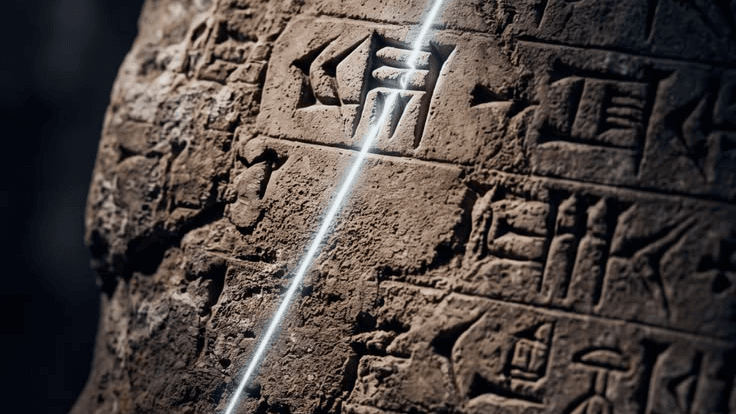
Imagine if every time an elder died, an entire library disappeared.
For most of human history, that was the reality.
Knowledge just used to live in memory.
A hunter would teach another hunter. A healer would train an apprentice. A parent simply told a child what they could remember.
And when the voice was gone, much of the knowledge went with it.
Writing changed that forever.
It gave humanity something it had never possessed before: The ability to have a conversation across centuries.
Writing did not begin as an act of creativity. It began as an act of preservation.
Across generations, human beings searched for ways to ensure that knowledge could travel farther than a single lifetime. Once ideas could be written down, wisdom no longer depended entirely on memory. A teacher could instruct students they would never meet. A generation could speak to another that had not yet been born.
Africa understood this too.

For centuries, scholars across northern Nigeria wrote Hausa, Fulfulde, and Kanuri using Ajami, an adapted Arabic script that became a powerful medium for recording poetry, history, religious scholarship, trade, correspondence, and governance. Libraries, courts, and centres of learning produced manuscripts that reflected distinctly African societies, proving that writing on the continent was not just borrowed. It was adapted. It was expanded.
It was made our own.
That is the hidden power of writing.
Writing does not just preserve words. It goes further to preserve the way a people think.
Writing remains one of humanity's greatest inheritances because it allows ideas to cross generations without losing their voice.
And in doing so, it reminds us that the greatest civilizations were not those that remembered everything.
They were the ones wise enough to decide what should never be forgotten.