
Sunday, August 16th 2026
Industrial Revolution
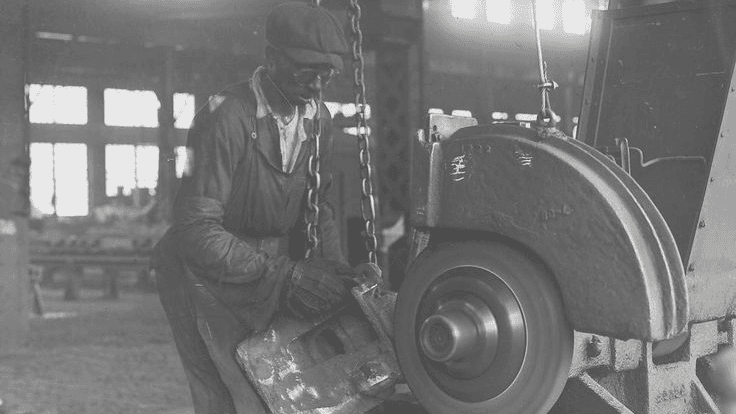
The first industrial revolution in Nigeria did not begin with a factory.
It began with fire.
Long before machines filled factories and assembly lines transformed production, ancient communities in what is now Nigeria had already discovered something that would change civilization forever; they learned how to turn stone into iron.

The Nok civilization, which flourished over two thousand years ago in central Nigeria, was among the earliest societies in sub-Saharan Africa to master iron smelting. Archaeologists have uncovered furnaces, iron tools, and evidence of sophisticated metalworking, revealing a people who understood that the future could be forged with their own hands.
That discovery did not just produce stronger tools.
It transformed agriculture, making farming more efficient. It improved hunting and craftsmanship. It expanded trade and increased productivity. Iron did not simply change what people made, it changed what society could become.
That is the true meaning of an industrial revolution.
It is not the arrival of machines. Rather, it is the arrival of a new way of creating value.
History often celebrates the Industrial Revolution of Britain because of steam engines and textile mills. But every industrial revolution, regardless of where it happens, follows the same pattern. Someone discovers a better way to produce, and that single breakthrough reshapes an economy.
The Nok people understood this long before the modern world gave it a name.
Their story reminds us that innovation is not foreign to Nigeria. It is part of our history.
The farther a nation moves from extracting to creating, the stronger its economy becomes.
This is why industrial revolutions change history. They create industries instead of dependence, factories instead of warehouses, and opportunities instead of imports.
Maybe, the question before Nigeria is not whether we have enough resources.
History has already answered that.
The real question is whether we will once again become a nation known not for what leaves our land in its raw form, but for what leaves our factories bearing the mark: Made in Nigeria.