
Thursday, October 29th 2026 · 3 min read
Office of the Tomorrow’s People: From Proposal to Action
An idea can start a conversation, but what happens next is what gives it meaning.
When people hear about a new initiative, they naturally want to know what it is about, who it serves and what difference it could make.
MadeInBlacc Factory is asking an important question; what would it take for young people to have a recognised platform to represent their interests, culture and ideas, and contribute to decisions that shape their future?
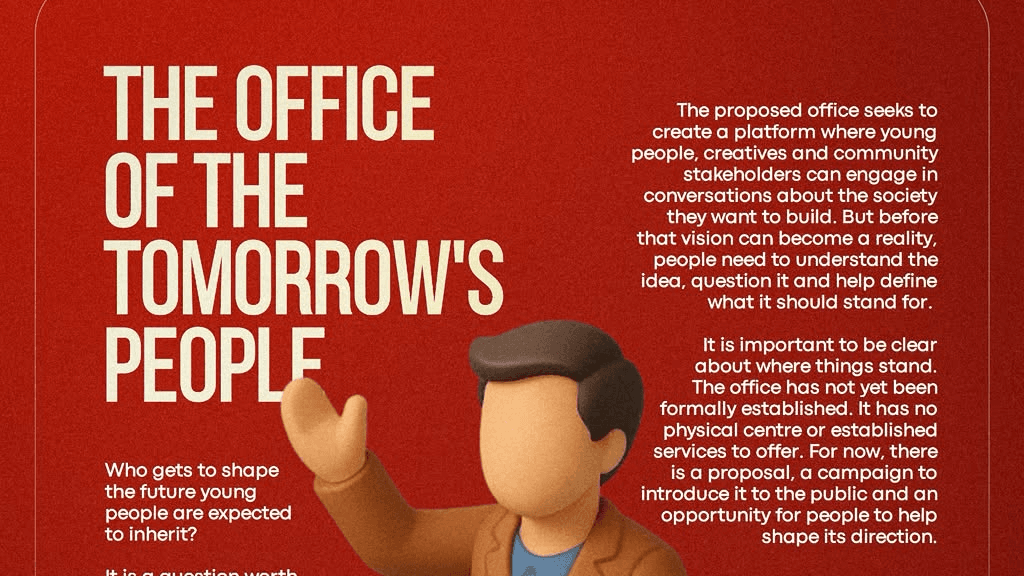
This question is the key idea to the proposed Office of the Tomorrow’s People, an initiative from MadeInBlacc Factory designed to bring young people, creatives, community institutions, traditional leaders and government into a sustained conversation about the future.
The proposal has been drafted and shared for feedback, marking a move towards implementation. Although the office has not yet been formally established, work is beginning on the steps needed to develop the proposal, build support and define how the initiative could operate.
Listening Before Building
Early discussions have produced suggestions about how the proposed office could serve young people. These contributions remain initial feedback rather than decisions already adopted by MadeInBlacc.
The next stage includes a meeting scheduled for October 30, 2026, under the theme “What Are We Building for Tomorrow?” The discussion invites young thinkers, creatives, innovators and problem-solvers to consider what needs to change and how they can contribute to building a better Africa.
Documenting the meeting's feedback and outcomes will be important in determining how these conversations inform the proposal.
Defining the Roles
The Blacc Classified project document outlines three roles intended to drive the initiative.
The King, or Lead Ambassador, will lead efforts to secure endorsements by approaching government representatives, traditional rulers, public institutions and other influential stakeholders.
The Queen, or Youth Culture Ambassador, will engage young people, artists and creatives, gathering their opinions and suggestions to ensure their experiences inform the proposal.
The Office Secretary will coordinate correspondence and appointments, record feedback and decisions, maintain endorsement records and publish progress updates.
Although these responsibilities have been outlined, the individuals who will occupy the roles have not yet been selected. Their selection will be an important step towards organising the work.
These are campaign roles and do not imply traditional rulership or government appointment.
Building Support for the Initiative
A central part of the implementation process is a public endorsement campaign, with an initial target of ten genuine endorsements.
The campaign will seek support from relevant government representatives, traditional rulers, community leaders, youth and cultural organisations, educators and other stakeholders.
The work ahead includes identifying potential endorsers, presenting the proposal, following up on responses and accurately documenting the support received. Verbal support, feedback and formal endorsements must be recorded separately.
Keeping records of consultations, decisions, commitments and completed activities will also help demonstrate the progress being made and the level of support the initiative attracts.
What Comes Next?
The proposed Office of the Tomorrow’s People is moving towards implementation, but important steps remain. These include selecting the three representatives, developing the proposal further and carrying out the endorsement campaign.
The immediate task is to turn the responsibilities and ideas outlined in the proposal into an organised process with clear actions and documented progress.
Ultimately, the initiative must demonstrate that young people can do more than express their concerns. Their voices, culture and ideas should have meaningful opportunities to influence their communities.
For an initiative centred on young people, their participation should begin while the proposal is still taking shape, not after decisions have been made.
What would you want to know about the proposed Office of the Tomorrow’s People before deciding whether to support it? Would you want to understand the representatives' responsibilities, how young people would participate, or how the office could become a reality?
The conversation is still open, and the questions people ask now could help shape what comes next.