
Monday, September 21st 2026
Proverbs – Generations of Wisdom, Compressed Into a Few Words
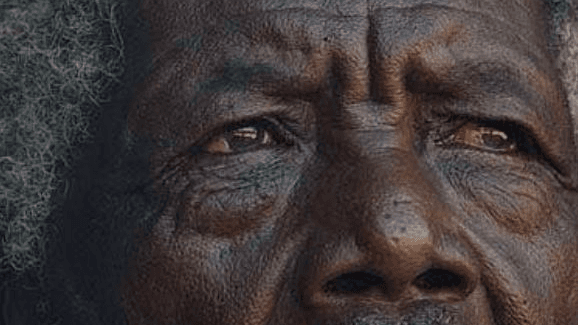
As a child, I often wondered why elders answered simple questions with difficult sentences.
You would ask one question then they would answer with a proverb.
At first, it felt like they were avoiding the conversation.
Years later, I realized they were doing something far greater.
They were actually teaching me how to think.
The great Nigerian novelist Chinua Achebe understood this when he wrote in Things Fall Apart:
"Among the Igbo, the art of conversation is regarded very highly, and proverbs are the palm oil with which words are eaten."
It is one of the finest descriptions of African wisdom ever written.
Truly, palm oil does not replace the meal, rather, it brings out its richness.
In the same way, proverbs do not replace conversation.
They deepen it.

There’s an Igbo saying that goes:
"Ihe onye metara, ya buru." Whoever creates a burden should carry it.
In just a few words, our ancestors taught accountability more effectively than pages of instruction ever could.
There’s also another one:
"Onye ajụjụ anaghị efu ụzọ." "He who asks questions never loses his way."
It is only six words.
Yet inside them are lessons about humility, curiosity, mentorship, and the courage to admit that we do not know everything.
When the Igbo say,
"Nwata kwocha aka, ọ soro okenye rie nri."
"When a child washes his hands, he may dine with elders."
In the actual sense, no one is talking about soap and water.
They are talking about character, discipline and about earning trust.
And finally, they remind us:
"A na-amata dike n'ogu." “A hero is known in battle.”
Character is not revealed in comfort.
It is revealed when life demands courage.
That is the extraordinary thing about proverbs.
They are among the smallest things a civilization creates.
Yet they often carry its greatest ideas.
Proverbs are small enough to remember
Yet deep enough to spend a lifetime understanding.
Proverbs continue to travel effortlessly from grandparents to grandchildren, carrying wisdom farther than monuments ever could.
They remind us that intelligence is not measured by how many words we speak, but by how much truth those words can carry.
Indeed, every proverb is more than a sentence.
Every proverb is history speaking through ordinary words and preserving it is refusing to let its wisdom die.