
Monday, September 14th 2026
RUTH8: Nigeria Has Stories, who Is Telling Them?
Until the lions have their own historians, the history of the hunt will always glorify the hunter.

These words of Chinua Achebe may have been deeper than they appear. If you do not tell your own story or share your side of events, someone else will eventually tell it for you, and their version may become the history everyone knows and carries.
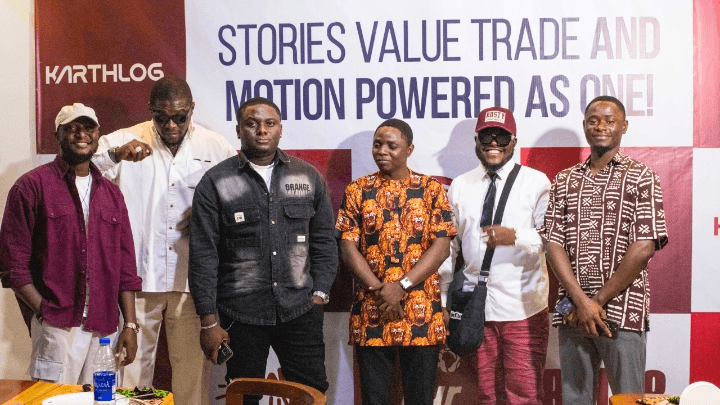
It came to life at the RUTH8 Workshop Dinner held on September 12, where creatives gathered around one central question: Who gets to tell our story?

The dinner, moderated by Mr. Ekene Ezemuanya, was a continuation of the RUTH8 journey, bringing creatives together to discuss storytelling, culture, identity and the responsibility of documenting the things that make us who we are.
Dr. Chika Nnabuife, one of the speakers, challenged Nigerian creatives to take greater ownership of the stories they tell. She pointed out that media professionals, from photojournalists and cinematographers to filmmakers and radio presenters, play an important role in shaping how Nigeria is seen.

For her, one of the problems is the generic way of telling Nigerian stories generally under the label of “Africa.”
“For storytelling to become ours, for us to own our stories, we need to put an end to generic storytelling,” she said. “This is Nigeria. Leave Africa.”
She used IShowSpeed’s visit to Lagos as an example, questioning why visitors are often shown only a one sided version of Nigeria when the country has so many different cultures and experiences.
“Why wasn't he taken to Enugu State? Why wasn't he taken to Calabar? Why wasn't he taken to Abeokuta? Why wasn't he taken to Kwara?” she asked.
Her point was not simply about tourism. It was about how much of Nigeria remains unexplored and undocumented, even by Nigerians them
selves.

She also raised concerns about the platforms through which Nigerians consume and distribute stories, describing the dominance of foreign digital platforms as another form of cultural influence.
“Now, we are being ‘colonized’ by the platforms that we use,” she said, adding that “a people can only survive as long as their story is told.”
But telling those stories, she argued, does not mean altering them to make them easier for outsiders to understand.
“To own our culture, to share our culture, to preserve our culture, we shouldn't be explaining. They will key in.”
Molokwu Christopher, the second speaker, approached the subject from the question of identity, encouraging creatives to embrace Nigerian culture.

“If we want to make ourselves trend... what character do we portray? Who really are we? What heritage do we carry?”
His answer was clear “Let's embrace our Nigerianness. Let's embrace our story, let's embrace who we are.”
Using the familiar hunter and lion analogy, he reminded the room that the hunter often wins in the stories people hear because the lion never gets to tell its own side.
“Right now, we are the lion,” he said.

He also emphasized on the importance of discipline for a successful storytelling. According to him, Nigerian creatives need to take the promotion and presentation of their work just as seriously as the work itself.

The conversation also turned towards the stories that have not yet been told. Mr. Jesse Miracle challenged filmmakers and other creatives to look beyond subjects that have already received attention and search for the histories that remain untapped.
“It's time we look beyond what is already existing,” he said. “We have stories that have not been tapped…Let's focus on digging up what is remaining.”

The panel discussion continued this conversation with YGB reminding participants that history is not only something that happened in the past as the things happening now will become history too.
“We are so much focused on history that we are forgetting the fact that we are living in tomorrow's history,” YGB said.
He also stressed the importance of locals documenting their own communities, saying, “I'd rather take a story that tells me about what happened in Awka than a story I read from someone that came in and asked questions.”

The evening eventually moved from talking about ownership to The leader introduced Wind and Way, a collection under the first phase of the Made in Black project, featuring three limited card types: The Pathfinder, The Shelter and The Engine.
The Pathfinder represents those who explore and seek new stories, The Shelter represents home and culture, while The Engine represents the commercial side of the ecosystem.

The project also introduces rewards for participation, summed up in the words: “You read, you earn; you write, you earn; you upload, you earn.”
The RUTH8 dinner was the second of eight planned experiences with the larger goal of building a digital community around participation, storytelling and culture.

By the end of the evening, the question “Who gets to tell our story?” had become less than a question but a wake up call
There are stories that have not been told, histories that have not been documented and parts of our identity we have allowed others to define. If we don't tell them, then who will?