
Thursday, September 17th 2026
The Ghost in the Loom: Nigeria’s Akwete Cloth
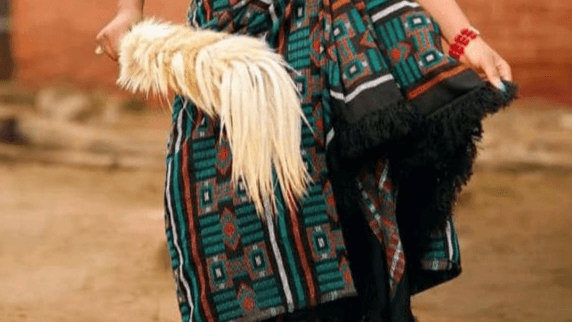
Long before a single thread crosses the frame, an Akwete pattern begins in silent dreams.
In Akwete, a town in Ndoki, Abia State, Nigeria, weaving is more than just manual labour. It is a conversation between generations, carried through thread, colour and pattern.

There are stories of master weavers whose knowledge was believed to have come through dreams and visions. One of the names often acknowledged in these stories is Dada Nwakata, a legendary Akwete weaver whose techniques were said to be so closely guarded that even some patterns could not be replicated until she was late.
Whether told as history or legend, these stories reveal something important about how Akwete has always been understood; it is not simply a cloth, it carries knowledge.

Who told us we were not civilised?
Who said we were not creating, and building before colonialism?
Too often, the story of African creativity begins with the arrival of Europeans, as though everything before then was waiting to be discovered.
But Akwete was already here.

Igbo women developed a sophisticated textile tradition around a wide, single panel cloth, made from mix of natural plant fibers and threads like cotton, sisal hemp, raffia, silk, and rayon, creating intricate designs one thread at a time. Weaving was not merely domestic work. It could provide women with income, independence and a place within the economic life of their communities.
The skill involved looks easy and can be underestimated until you actually look at a loom.
Imagine sitting down and building a pattern thread by thread, remembering the sequence, maintaining the tension and somehow turning individual strands into something that can carry meaning.
That is craftsmanship.
And that craftsmanship speaks to something seen repeatedly in Igbo history; hard work turned into systems of survival, trade and independence.

Akwete patterns were not simply there to make the cloth beautiful. Different motifs and designs could carry cultural meanings and communicate things about identity, status, occasion and belief. The tortoise, for instance, in Igbo visual traditions appears as a symbol related to qualities such as wisdom and longevity.
The cloth could also carry spiritual significance. Traditional beliefs surrounding weaving connected certain designs and practices with protection, identity and the spiritual world.
And then there was the money.

Akwete weaving gave women a way to participate directly in trade. The cloth travelled beyond the community and became a valuable commodity, connecting local weavers to wider markets, including European traders during the colonial period.
So when we look at an Akwete cloth today, we should see more than colourful threads arranged on a loom.

We should see the woman who sat down to weave it, the knowledge she inherited, the knowledge she protected, the knowledge she passed on.
The economic power created from her hands and the culture encoded into every pattern, one thread at a time.
Maybe that is the real “ghost” in the loom.
Not a ghost in the way we usually imagine one, but the presence of people who came before us still speaking through something they left behind.
Akwete has travelled before. It has crossed communities, markets and even continents. Today, it is still finding its place in contemporary fashion and international markets. But what if we took it further than it is, because this is ours