
Wednesday, September 9th 2026
The Igbo Culture We Know And The One We Forgot
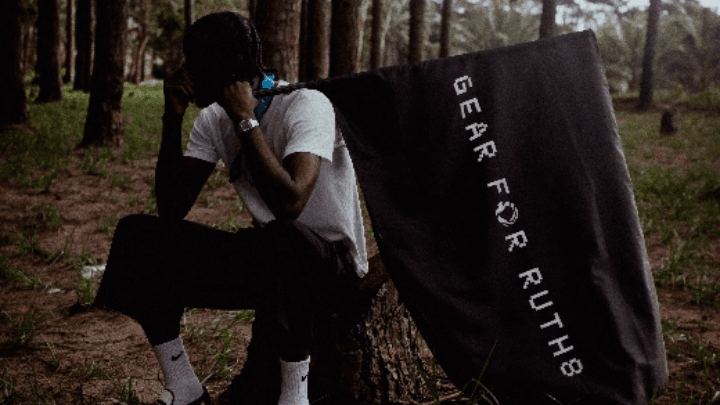
RUTH8: Beyond the Stories We Were Told About Igbo Culture
Many of what we know about ourselves comes in fragments.
Names, incomplete stories, symbols we recognise but may not fully understand,a masquerade we watch without knowing what it once represented.
We learn some of these things from school, family conversations, films and social media. Over time, the fragments become what we know as our culture, our beliefs, our spirituality and our identity.

What did Ekwensu really mean before he became “the devil”? What did masquerades represent outside the dancing and costumes?
Ekwensu, Chi, Igbu Ichi, Ikenga, Mmuo Onwu, Ijele and many more
Words many have heard,some we may recognise,but how much do we know about what they meant,represented, and why they mattered?
That question came into clear view during RUTH8’s first journey to Enugu.
At the Centre of Memories,there was an encounter with an Igbo past that many of the young people on the trip had only known in fragments
Reincarnation May Be Deeper Than Thought
The Igbo cosmology and spirituality introduced the crew to different realms within the Igbo worldview, including Chukwu, Ala mmadu and the spiritual realm, as well as the concept of Chi ,the individual's personal spiritual identity, destiny or fate.

The circle of life was pictorially represented, incorporating the Igbo belief in reincarnation.
Igbo people did not believe that a soul was lost forever.The traditional Igbo viewed existence as a continuing cycle. When a person dies, the soul does not simply stop existing; rather, an ancestor who has died may return through reincarnation, and a new child is believed to carry that ancestral connection.Factors like a bad or mysterious death, and bad living on earth could hinder reincarnation
They were also introduced to deities such as Amadioha, associated with justice, and Ani, associated with the earth and fertility.
Ekwensu Was Not Simply “The Devil”
One interesting discussion centred on Ekwensu, a figure that has often been misunderstood through the Christian concept of the devil.

Ekwensu was originally revered as the deity of war and mischief. According to Ifeoma Nnamani, he was ruthless, and sometimes the extent he would go to when fighting a war could be unpredictable or uncontrollable, but he was never understood as an opposition to Chukwu.

Unlike some Nollywood representations, the crew learned that Dibias were specialists in different forms of traditional knowledge, including divination, herbal medicine and rainmaking. Agwu was also discussed in relation to divination and knowledge.
It was a reminder that understanding a culture requires going back to its language and worldview instead of interpreting it entirely through someone else’s lens or view
The journey was not necessarily asking participants to accept every traditional belief,it was simply asking them to understand before judging.
When Masquerades Were More Than Entertainment
For many young Nigerians today, masquerades are often associated with festivals, dancing and entertainment.
But the Centre of Memories offered a different perspective. The crew learned about Mmuo Onwu; masked spirits or beings and the distinction between spiritual masquerades and those primarily used for entertainment.

According to Ifeoma, some masquerades historically served social functions, helping to maintain order, settle disputes and punish offenders.
One statement particularly captured the idea;
“Igbo people even had the concept of lady justice even before the white came.”

The explanation suggested that these masked figures could function as impartial judges because their identities were concealed, allowing cases to be considered on their merits rather than according to personal relationships.
The crew also encountered different masquerades and learned that they could represent different personalities, social roles and community traditions.
Interestingly, Mmuo Onwu incorporated family settings. There was Nna Mmuonwu, Nne Mmuonwu, Adamma and Ogwurugwu.

Just like a typical family setting, the younger ones were described as more vibrant and energetic than the elderly ones.

Ogwurugwu, which was described as the second-born, was more colourful than Adamma, while the younger males were more violent and energetic.
The crew learned about Ijele, one of Igbo culture’s largest and most significant masquerades, including its preparation, structure, connection to Ani and the Python as the messenger of Ani, as well as its recognition on UNESCO’s intangible cultural heritage list.
What appeared from the outside to be simply colourful performance carried a deeper structure of identity, personality and social meaning.
The Marks That Told a Story
The interest grew more when the crew learned about Igbu Ichi, the traditional scarification associated with becoming an Nze na Ozo.
The process involved imprinting marks on the body with a hot instrument and cutting a part of the tongue as a ritual to stand for truth.This was not simply decoration.
The process was presented as a demonstration of endurance and courage. A person undergoing it was expected not to scream or cry.

People in this position were given a sacred stool, which they sat on throughout their lifetime, a cap with an eagle feather, an Ofor symbolising justice, and an Alo symbolising authority.
One of the remarkable things was that they were buried sitting on their “Oche Mpata”. These practices were also supported by archaeological discoveries, as archaeologists found skeletons buried in a sitting position.
For the crew, the story transformed the scars from marks on a body into symbols of identity, status and endurance.
When an Object Carries a Person’s Identity
Another object that generated interest was Ikenga. More than being a mere wooden idol, the crew learned that an Ikenga was created with the owner's identity and achievements in mind.

A hunter might have an antelope represented on his Ikenga, a farmer might be represented through an agricultural symbol like food, a titled person might have symbols associated with his position.
“They try to infuse your essence or person.”
That relationship between the individual and his Ikenga was particularly interesting
The crew learned about what happened to an Ikenga after its owner's death and about the idea that an Ikenga could eventually be discarded as firewood once its purpose was no longer being fulfilled or was no longer functional, just as an Igbo proverb illustrates:
“Ma Ikenga adighi ire awa ya nku.”

The lesson was not simply about an artifact. It was about the relationship between an object, its owner, identity and purpose.
This was captured in Francis' words:
“...I have a clearer view of who an Igbo man is …And I learned that an Igbo man is a strong Igbo man in the spiritual system, he doesn't necessarily beg to talk to his Chi or God or deities, he gives instructions. That's power. The Igbo men then knew who they were, which we have forgotten.”
When History Becomes Real
That feeling continued at the National Museum of Unity.
The museum exposed the crew to archaeological and ethnographic materials and other representations of Nigerian and Igbo life.

There were also ninth-century artifacts and displays relating to Igbo-Ukwu, traditional architecture and the history of Enugu as the Coal City.
For Francis, the experience gave him a powerful observation about accessibility.
“I wish it's that normal for people to be walking into museums.”
This statement goes beyond the surface meaning;
If people rarely encounter their own history, how then can they develop familiarity with it ?

if younger generations only encounter their heritage through fragments,textbooks,stereotypes or second-hand interpretations, how better can they tell their own story
By seeing these representations, the past felt less distant,it became something the crew could actually see.

A masquerade,an Ikenga,a scarification mark, a museum artifact can carry a deeper meaning when its history and purpose are understood. It moves you to realise that someone made it, used it, lived with it and passed its story down.
More than information,the journey left the crew with a responsibility and a call to action
Because knowing what is true is just the beginning, what matters is what we preserve.