
Thursday, September 17th 2026
What is Culture? - What We Inherit, Practice and Pass On
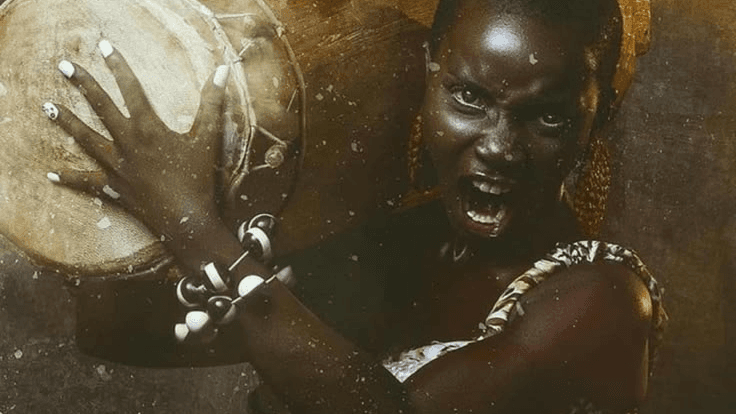
Before you chose your first word, someone had already chosen the language you would speak.
Before you celebrated your first festival, someone had already decided what your community would look like.
Before you answered your own name, someone had already given meaning to the act of naming.
That invisible inheritance is what we call culture.
Many people think culture is found in food, clothing, music, or festivals.
Those are just its expressions.
Culture itself is something deeper.
It is the collection of values, beliefs, customs, stories, and ways of seeing the world that one generation entrusts to the next. It teaches people not only how to live, but why they live the way they do.

Chinua Achebe gave us this saying:
"A man who does not know where the rain began to beat him cannot say where he dried his body."
The wisdom of this sentence reaches far beyond one culture.
A people who do not understand what shaped them will struggle to understand what should shape their future.
This is why culture has always been one of humanity's greatest inheritances.
It is not stored in vaults, rather it is stored in people.
We know about the Yoruba greeting that honours age, the Igbo proverb that settles a dispute, the Hausa praise poetry that preserves memory, the Efik songs that welcome a new season.
Each carries a worldview that survived because someone believed it was worth passing on.
Wole Soyinka also reminds us that:
"There's no way to escape the culture that has evolved, from which we ourselves have evolved... it is there - a source of vital strength."
History proves him right.
No civilization has endured by abandoning its culture.
The civilizations remembered across the world are those that preserved it, questioned it, refined it, and carried it forward.
Maybe that is the greatest misunderstanding about culture.
It is not the opposite of progress. It is the foundation that gives progress its identity.
We inherit culture from those before us.
We practise it in our own time.
We reshape it with wisdom.
Then we place it into the hands of those who come after.
That is how civilizations survive.
Culture is not what a people leave behind.
It is what refuses to leave them.