
Saturday, September 19th 2026
When Memory Is the Only Archive: What We Stand to Lose
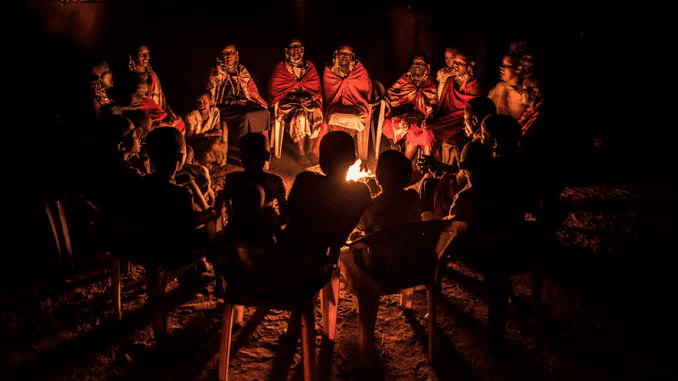
For many communities in Nigeria, preserving a clear record of their history, culture and collective memory remains a challenge. Much of what we know has been passed down orally, through family accounts, museum archives, cultural practices and scattered written records.

But one difficult thing about oral history is that memory changes with time. Stories can become shorter, details can be forgotten, meanings can be altered, and eventually, something once understood as fact can begin to sound like myth.
This affects more than stories, it starts with our names, festivals, community histories, traditions, trees, plants and the meanings attached to them.
If you Google 9/11, even without a specific name of event, you can find photographs, videos, eyewitness accounts, timelines, official records and thousands of written accounts of an event that happened decades ago. The people who experienced it will eventually grow old and die, but the event remains accessible through the records created around it.
For the Igbo, some valuable records do not exist in books or museums, thhey live in people's minds and memories.
That is how something as important as the meaning of a name can disappear.

An Igbo name can carry a sentence, a prayer, a circumstance or a memory. Names were not just answered because they were beautiful, it could tell you what a family had experienced, what they believed, what they hoped for or what they were asking from God, yet many of us bear names whose full meanings we cannot explain.
Chinua is one example. What may appear to be just a name can carry something much more: a shortened form of Chinualumogu, a prayer that God would fight on one’s behalf.
Then there are names like Ezeoke, whose meaning is difficult to establish because different interpretations exist, including “king of creation,” “the king’s share,” “gift of the king” and “kingly gift.” So which is the original meaning? And who still knows the story behind the name well enough to tell us?
How many other names are we carrying without knowing the stories inside them?

Even our community names have stories. Some have been altered, shortened or written differently over time. In some cases, colonial records and the difficulty of representing indigenous pronunciations and spellings in English may have influenced the forms that later became widely used, where Oka is spelt as Awka, Enugwu as Enugu, Ehugbo as Afikpo.
When the original meaning and pronunciation are no longer there, it becomes more difficult to know the deeper history behind a name.
Then come the things that even a Google search cannot give detailed information about.

Many older Igbo people carry knowledge about trees, plants and practices that younger people may never encounter in the same way. Anunuebe, the sacred tree that even birds cannot perch on, is now often described as legendary or mythological.
Ogirisi, the tree of boundaries, has traditionally been used in settling land disputes long before the English law was adopted while Oji carries meanings far beyond simply being a tree.
The problem is not only that a tree may disappear. It is that the knowledge attached to it can disappear with it.

Nsibidi is another example of what can happen to cultural knowledge. Its symbols survived, but much of the knowledge surrounding their meanings was not something everyone had equal access to. When the people, institutions and practices that carried such knowledge changed, some meanings became harder for later generations to recover.
The same applies to our festivals. We celebrate New Yam festivals, Igba Mmuonwu, Imo Awka, Iwa awka and many others, but how many people can explain the deeper reasons behind every practice, symbol or ritual involved?

Sometimes we know what we do but no longer know why we do it and when the people who knew the “why” are gone, what happens to the story?
Some stories are now described as myths even though they may preserve memories of experiences whose original context was never documented well enough for later generations to understand.

That is the danger of making memory our only archive. A story told by a grandfather can survive for generations, but if nobody records it, researches it or preserves its context, each generation becomes another opportunity for a piece to be lost.
We are already seeing fragments of this loss in our names, languages, festivals, community histories and traditional knowledge.
And perhaps what matters is not only what we are losing, but what we are preserving for the generation that comes after us
When they search for who we were, what will they find?

Will they find only fragments left behind by colonial records and outsiders who attempted to describe us? Or will they find records of how we understood ourselves: our names, our stories, our memories, our places, our beliefs and the meanings behind them?
Because it is not merely the tree we lose when the tree is forgotten. It is the knowledge attached to the tree.
It is not merely the name we lose when its meaning disappears. It is the memory inside the name.
And when enough of those memories disappear, we do not simply lose pieces of our heritage. We lose pieces of the evidence of who we were.