
Monday, September 7th 2026
Why SMEs Matter
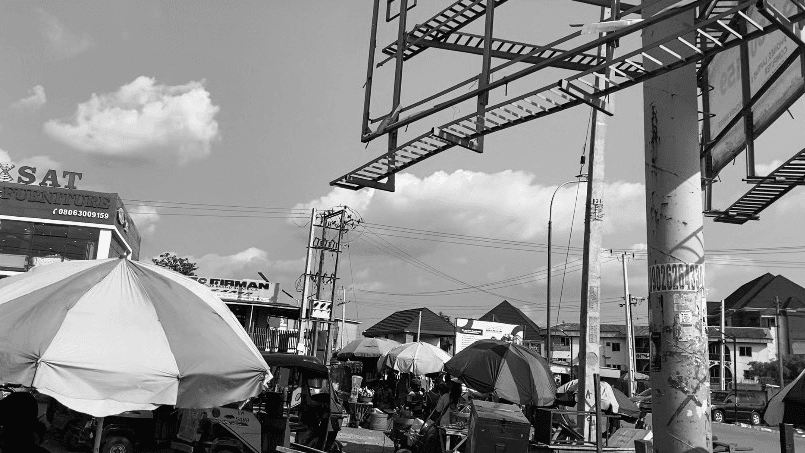
Every economy has two kinds of businesses. The ones everyone knows. And the ones everyone depends on.
The first are easy to recognize. Their names appear on billboards, shopping centres, and stock exchanges. Their success is measured in market share, expansion, and valuation.
The second kind are less visible. They are the neighbourhood convenience stores that open before sunrise. The Akara seller at the junction who has fed university students for five generations. The cyber cafe that equips students before, during and after studies for their school paperwork. The cafe that becomes an office for Tech Bros. The shawarma kiosk trusted by an entire community. The POS agency helping people with convenient cash. These businesses rarely dominate headlines, yet they quietly shape everyday life.
Small and Medium-sized Enterprises, commonly known as SMEs, are often described as the backbone of an economy. Not because they are the largest businesses, but because they are the most numerous. Together, they create employment, circulate income, encourage innovation, and keep local economies in motion. They are where many entrepreneurs begin, because large companies are rarely born large.
They start as an idea, an experiment, a single customer, a small team trying to solve a problem well enough to earn trust. Every successful enterprise was once small enough to fit around a table. Which is why SMEs matter beyond economics. They create participation, lowering the barrier between having an idea and building a business. They give individuals the opportunity to create value without waiting for perfect conditions. In doing so, they make economic growth something more people can contribute to rather than simply benefit from.
As these businesses grow, something else happens. Skills are transferred and careers are formed. Communities develop around enterprise. One business creates demand for another, then growth becomes connected. And this is how economies mature, through thousands of smaller businesses strengthening one another over time. Perhaps this is the true significance of SMEs.
They remind us that economic progress is rarely built from the top down. It is accumulated from the ground up. One customer. One employee. One partnership. One enterprise at a time.
The future of any economy will always depend on its largest institutions. But its resilience will often depend on its smallest businesses. Because while big companies may define the skyline, SMEs shape the streets. And every thriving economy is built on both.